.png)


Sales tactics live in the call, not on the website, so Mystery Demo captures the full motion as it really runs. Competitor sales tactics research records their discovery question patterns, demo flow, technical deep-dive structure, follow-up cadence, objection handling moves, and the exact framings reps use to close. Every meeting is recorded, every email is captured, and every behavior is scored, so you see how the deal really runs rather than how their marketing page claims it does.
Mystery Demo builds a believable backstory rooted in truth before the first call ever happens. We define a buyer profile, company name, use case, team size, decision timeline, and budget signal, and we make sure every detail lines up. The competitor's rep runs the deal like a serious opportunity because, by every behavioral signal that matters, it is one. That is what lets competitor sales tactics research capture the real motion instead of a guarded sales pitch.
Reps engage with these recordings far more than they ever engage with slide decks. Watching another seller run discovery and close objections is a coaching tool that lands in a way no battlecard can match, because it shows the motion in motion. Most teams who run competitor sales tactics research with Mystery Demo build a few of these recordings into the centerpiece of their next sales kickoff, where the room can study the close attempt frame by frame.
Mystery Demo gives you a scorecard for every step of every motion. Competitor sales tactics research scores discovery quality, technical depth on the demo, responsiveness across the cycle, follow-up rigor, deal pacing, objection handling under pressure, and how the rep positions against you specifically. Each one gets a rated breakdown, so the findings ladder directly into something your enablement team can act on instead of a vague set of impressions.
A single-competitor project runs about one to two weeks, because Mystery Demo walks the full cycle the way a real buyer would: booking, intro call, demo, technical deep-dive, follow-up, and then editorial analysis. You cannot out-sell what you cannot see, so we take the time to see all of it. A full competitive landscape covering several competitors at once runs roughly four to eight weeks, since the demos run in parallel without stretching any single project.
Mystery Demo covers both, because sales tactics start the moment the first SDR reaches out. We capture the SDR cadence from first touch, including email patterns, LinkedIn outreach, sequence timing, and the exact framing they use to turn a cold lead into a booked meeting. Then competitor sales tactics research moves into the AE conversations, so you see the handoff and the full motion rather than one isolated stage of it.
Partners who fold the captured motion patterns into their own deals tend to win more often against the specific competitor they studied, because they are copying what already works in the field instead of inventing a new playbook. That is the core promise of competitor sales tactics research at Mystery Demo: you cannot out-sell what you cannot see, so we show you the moves that close deals and let you run them yourself.
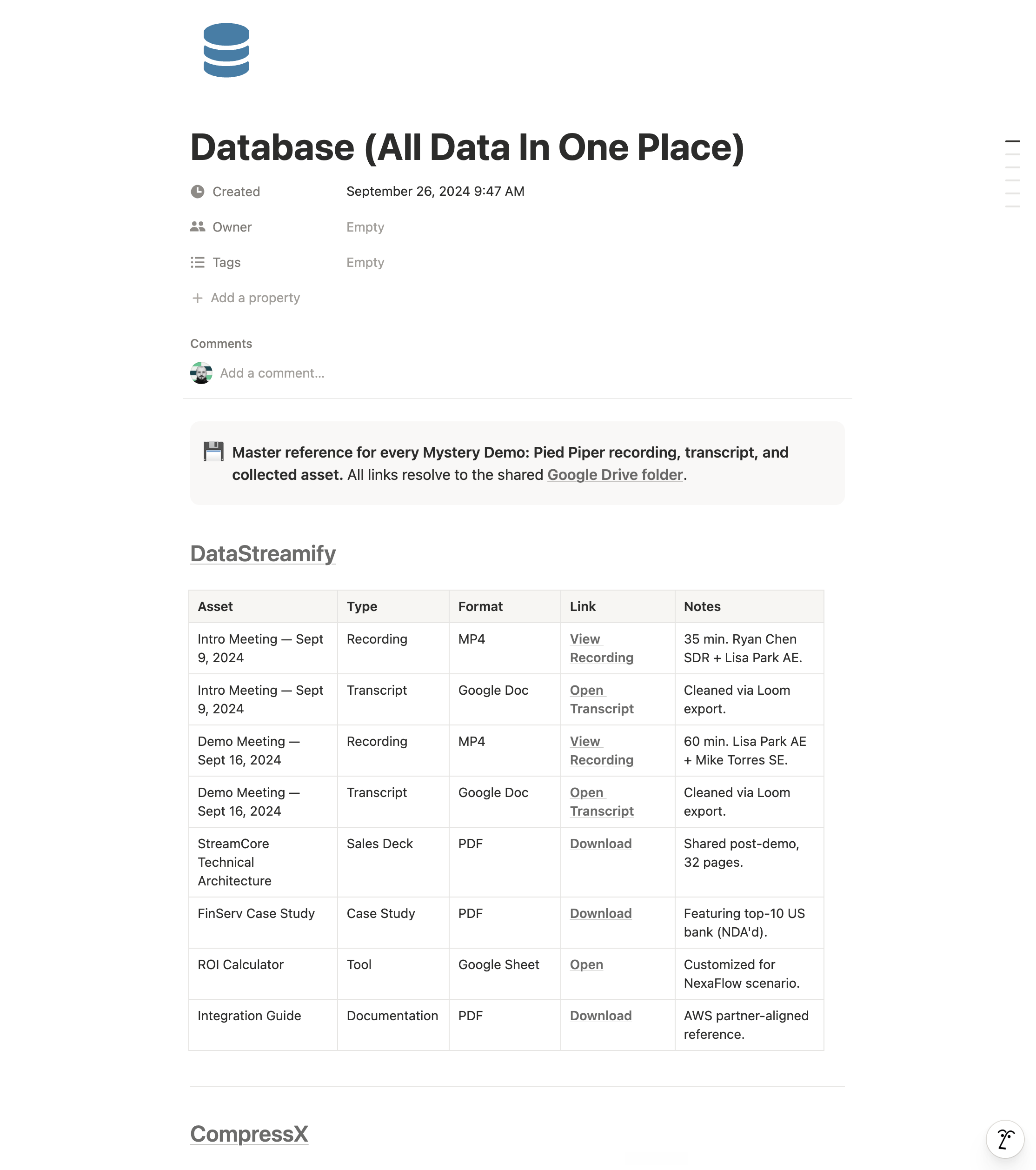
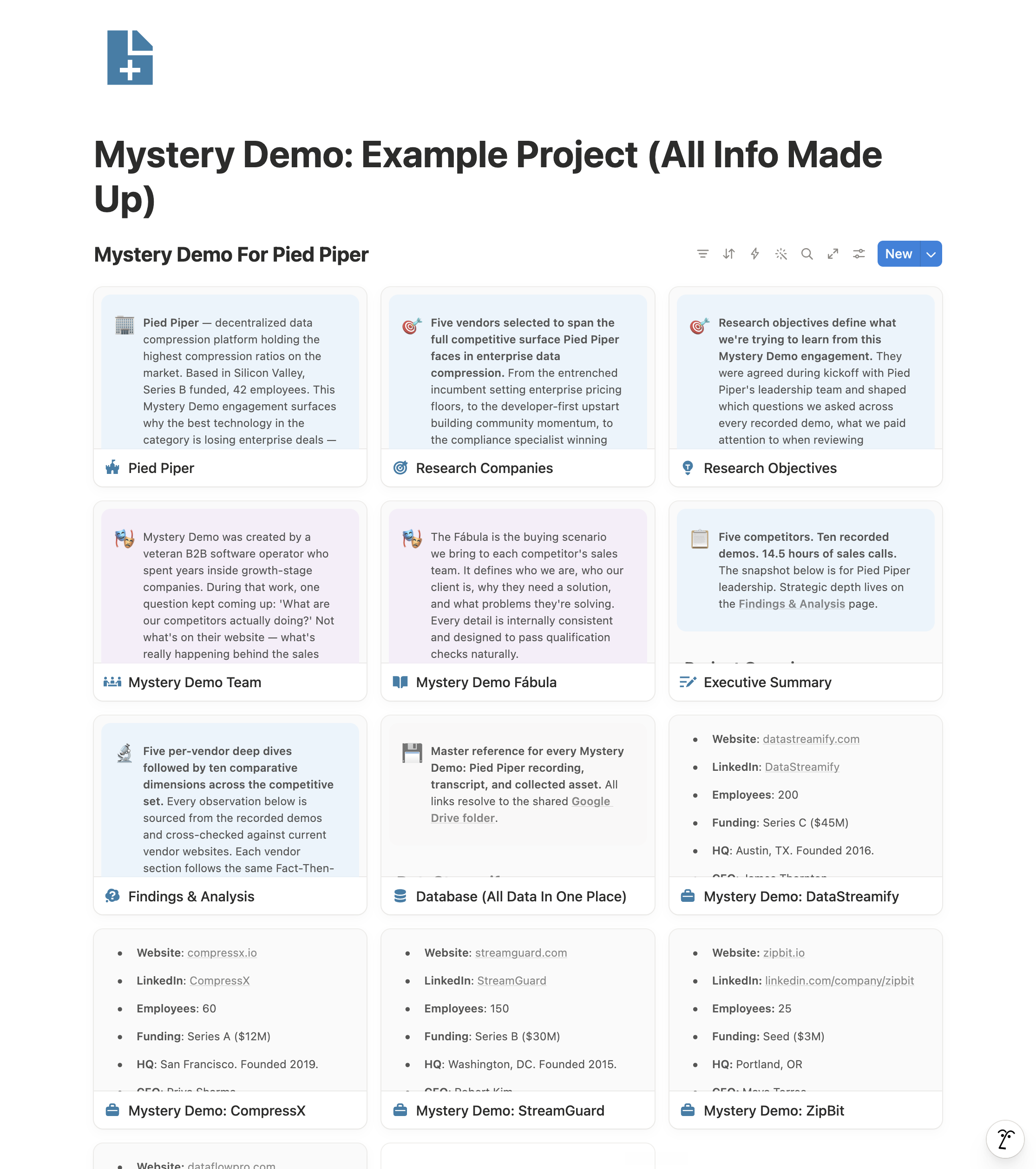
You get both. Because we record every call on our side, Mystery Demo delivers the recordings alongside timestamped transcripts, so you can jump straight to the discovery moment, the demo flow, or the close attempt without scrubbing through an hour of footage. In the competitor sales tactics research, the transcripts and recordings live side by side in the Notion board, so every scored finding sits one click away from the exact moment it came from.
Mystery Demo runs the cycle the way a real buyer in that segment would. Long enterprise motions move through several meetings, so we walk the booking, discovery, demo, technical deep-dive, and follow-up in sequence, because sales tactics live in the call and the long cycle is where the real ones surface. The cover story stays consistent across every conversation, so competitor sales tactics research captures the behavior reps use on real buyers.
Competitor sales tactics research delivers a scorecard for every step of every motion, organized in the Notion board so each finding sits one click from its source. It breaks down discovery patterns, demo execution, follow-up behavior, deal pacing, and comparative positioning, and every finding is cited back to the exact moment in the recording where it came from. You cannot out-sell what you cannot see, so Mystery Demo makes sure each conclusion traces to a real second of a real call you can replay.
Sales tactics live in the call, not on the website, so Mystery Demo captures the full motion as it really runs. Competitor sales tactics research records their discovery question patterns, demo flow, technical deep-dive structure, follow-up cadence, objection handling moves, and the exact framings reps use to close. Every meeting is recorded, every email is captured, and every behavior is scored, so you see how the deal really runs rather than how their marketing page claims it does.
Mystery Demo builds a believable backstory rooted in truth before the first call ever happens. We define a buyer profile, company name, use case, team size, decision timeline, and budget signal, and we make sure every detail lines up. The competitor's rep runs the deal like a serious opportunity because, by every behavioral signal that matters, it is one. That is what lets competitor sales tactics research capture the real motion instead of a guarded sales pitch.
Reps engage with these recordings far more than they ever engage with slide decks. Watching another seller run discovery and close objections is a coaching tool that lands in a way no battlecard can match, because it shows the motion in motion. Most teams who run competitor sales tactics research with Mystery Demo build a few of these recordings into the centerpiece of their next sales kickoff, where the room can study the close attempt frame by frame.
Mystery Demo gives you a scorecard for every step of every motion. Competitor sales tactics research scores discovery quality, technical depth on the demo, responsiveness across the cycle, follow-up rigor, deal pacing, objection handling under pressure, and how the rep positions against you specifically. Each one gets a rated breakdown, so the findings ladder directly into something your enablement team can act on instead of a vague set of impressions.
A single-competitor project runs about one to two weeks, because Mystery Demo walks the full cycle the way a real buyer would: booking, intro call, demo, technical deep-dive, follow-up, and then editorial analysis. You cannot out-sell what you cannot see, so we take the time to see all of it. A full competitive landscape covering several competitors at once runs roughly four to eight weeks, since the demos run in parallel without stretching any single project.
Mystery Demo covers both, because sales tactics start the moment the first SDR reaches out. We capture the SDR cadence from first touch, including email patterns, LinkedIn outreach, sequence timing, and the exact framing they use to turn a cold lead into a booked meeting. Then competitor sales tactics research moves into the AE conversations, so you see the handoff and the full motion rather than one isolated stage of it.
Partners who fold the captured motion patterns into their own deals tend to win more often against the specific competitor they studied, because they are copying what already works in the field instead of inventing a new playbook. That is the core promise of competitor sales tactics research at Mystery Demo: you cannot out-sell what you cannot see, so we show you the moves that close deals and let you run them yourself.
You get both. Because we record every call on our side, Mystery Demo delivers the recordings alongside timestamped transcripts, so you can jump straight to the discovery moment, the demo flow, or the close attempt without scrubbing through an hour of footage. In the competitor sales tactics research, the transcripts and recordings live side by side in the Notion board, so every scored finding sits one click away from the exact moment it came from.
Mystery Demo runs the cycle the way a real buyer in that segment would. Long enterprise motions move through several meetings, so we walk the booking, discovery, demo, technical deep-dive, and follow-up in sequence, because sales tactics live in the call and the long cycle is where the real ones surface. The cover story stays consistent across every conversation, so competitor sales tactics research captures the behavior reps use on real buyers.
Competitor sales tactics research delivers a scorecard for every step of every motion, organized in the Notion board so each finding sits one click from its source. It breaks down discovery patterns, demo execution, follow-up behavior, deal pacing, and comparative positioning, and every finding is cited back to the exact moment in the recording where it came from. You cannot out-sell what you cannot see, so Mystery Demo makes sure each conclusion traces to a real second of a real call you can replay.
Sales tactics live in the call, not on the website, so Mystery Demo captures the full motion as it really runs. Competitor sales tactics research records their discovery question patterns, demo flow, technical deep-dive structure, follow-up cadence, objection handling moves, and the exact framings reps use to close. Every meeting is recorded, every email is captured, and every behavior is scored, so you see how the deal really runs rather than how their marketing page claims it does.
Mystery Demo builds a believable backstory rooted in truth before the first call ever happens. We define a buyer profile, company name, use case, team size, decision timeline, and budget signal, and we make sure every detail lines up. The competitor's rep runs the deal like a serious opportunity because, by every behavioral signal that matters, it is one. That is what lets competitor sales tactics research capture the real motion instead of a guarded sales pitch.
Reps engage with these recordings far more than they ever engage with slide decks. Watching another seller run discovery and close objections is a coaching tool that lands in a way no battlecard can match, because it shows the motion in motion. Most teams who run competitor sales tactics research with Mystery Demo build a few of these recordings into the centerpiece of their next sales kickoff, where the room can study the close attempt frame by frame.
Mystery Demo gives you a scorecard for every step of every motion. Competitor sales tactics research scores discovery quality, technical depth on the demo, responsiveness across the cycle, follow-up rigor, deal pacing, objection handling under pressure, and how the rep positions against you specifically. Each one gets a rated breakdown, so the findings ladder directly into something your enablement team can act on instead of a vague set of impressions.
A single-competitor project runs about one to two weeks, because Mystery Demo walks the full cycle the way a real buyer would: booking, intro call, demo, technical deep-dive, follow-up, and then editorial analysis. You cannot out-sell what you cannot see, so we take the time to see all of it. A full competitive landscape covering several competitors at once runs roughly four to eight weeks, since the demos run in parallel without stretching any single project.
Mystery Demo covers both, because sales tactics start the moment the first SDR reaches out. We capture the SDR cadence from first touch, including email patterns, LinkedIn outreach, sequence timing, and the exact framing they use to turn a cold lead into a booked meeting. Then competitor sales tactics research moves into the AE conversations, so you see the handoff and the full motion rather than one isolated stage of it.
Partners who fold the captured motion patterns into their own deals tend to win more often against the specific competitor they studied, because they are copying what already works in the field instead of inventing a new playbook. That is the core promise of competitor sales tactics research at Mystery Demo: you cannot out-sell what you cannot see, so we show you the moves that close deals and let you run them yourself.
You get both. Because we record every call on our side, Mystery Demo delivers the recordings alongside timestamped transcripts, so you can jump straight to the discovery moment, the demo flow, or the close attempt without scrubbing through an hour of footage. In the competitor sales tactics research, the transcripts and recordings live side by side in the Notion board, so every scored finding sits one click away from the exact moment it came from.
Mystery Demo runs the cycle the way a real buyer in that segment would. Long enterprise motions move through several meetings, so we walk the booking, discovery, demo, technical deep-dive, and follow-up in sequence, because sales tactics live in the call and the long cycle is where the real ones surface. The cover story stays consistent across every conversation, so competitor sales tactics research captures the behavior reps use on real buyers.
Competitor sales tactics research delivers a scorecard for every step of every motion, organized in the Notion board so each finding sits one click from its source. It breaks down discovery patterns, demo execution, follow-up behavior, deal pacing, and comparative positioning, and every finding is cited back to the exact moment in the recording where it came from. You cannot out-sell what you cannot see, so Mystery Demo makes sure each conclusion traces to a real second of a real call you can replay.
Sales tactics live in the call, not on the website, so Mystery Demo captures the full motion as it really runs. Competitor sales tactics research records their discovery question patterns, demo flow, technical deep-dive structure, follow-up cadence, objection handling moves, and the exact framings reps use to close. Every meeting is recorded, every email is captured, and every behavior is scored, so you see how the deal really runs rather than how their marketing page claims it does.
Mystery Demo builds a believable backstory rooted in truth before the first call ever happens. We define a buyer profile, company name, use case, team size, decision timeline, and budget signal, and we make sure every detail lines up. The competitor's rep runs the deal like a serious opportunity because, by every behavioral signal that matters, it is one. That is what lets competitor sales tactics research capture the real motion instead of a guarded sales pitch.
Reps engage with these recordings far more than they ever engage with slide decks. Watching another seller run discovery and close objections is a coaching tool that lands in a way no battlecard can match, because it shows the motion in motion. Most teams who run competitor sales tactics research with Mystery Demo build a few of these recordings into the centerpiece of their next sales kickoff, where the room can study the close attempt frame by frame.
Mystery Demo gives you a scorecard for every step of every motion. Competitor sales tactics research scores discovery quality, technical depth on the demo, responsiveness across the cycle, follow-up rigor, deal pacing, objection handling under pressure, and how the rep positions against you specifically. Each one gets a rated breakdown, so the findings ladder directly into something your enablement team can act on instead of a vague set of impressions.
A single-competitor project runs about one to two weeks, because Mystery Demo walks the full cycle the way a real buyer would: booking, intro call, demo, technical deep-dive, follow-up, and then editorial analysis. You cannot out-sell what you cannot see, so we take the time to see all of it. A full competitive landscape covering several competitors at once runs roughly four to eight weeks, since the demos run in parallel without stretching any single project.
Mystery Demo covers both, because sales tactics start the moment the first SDR reaches out. We capture the SDR cadence from first touch, including email patterns, LinkedIn outreach, sequence timing, and the exact framing they use to turn a cold lead into a booked meeting. Then competitor sales tactics research moves into the AE conversations, so you see the handoff and the full motion rather than one isolated stage of it.
Partners who fold the captured motion patterns into their own deals tend to win more often against the specific competitor they studied, because they are copying what already works in the field instead of inventing a new playbook. That is the core promise of competitor sales tactics research at Mystery Demo: you cannot out-sell what you cannot see, so we show you the moves that close deals and let you run them yourself.
You get both. Because we record every call on our side, Mystery Demo delivers the recordings alongside timestamped transcripts, so you can jump straight to the discovery moment, the demo flow, or the close attempt without scrubbing through an hour of footage. In the competitor sales tactics research, the transcripts and recordings live side by side in the Notion board, so every scored finding sits one click away from the exact moment it came from.
Mystery Demo runs the cycle the way a real buyer in that segment would. Long enterprise motions move through several meetings, so we walk the booking, discovery, demo, technical deep-dive, and follow-up in sequence, because sales tactics live in the call and the long cycle is where the real ones surface. The cover story stays consistent across every conversation, so competitor sales tactics research captures the behavior reps use on real buyers.
Competitor sales tactics research delivers a scorecard for every step of every motion, organized in the Notion board so each finding sits one click from its source. It breaks down discovery patterns, demo execution, follow-up behavior, deal pacing, and comparative positioning, and every finding is cited back to the exact moment in the recording where it came from. You cannot out-sell what you cannot see, so Mystery Demo makes sure each conclusion traces to a real second of a real call you can replay.