
Most of what reps call an objection is a reflex, the verbal equivalent of flinching when someone reaches toward your face. The real objections, the ones that decide deals, are a much smaller and stranger set than the horror stories reps trade with each other.
We sit in competitors’ demos as a real buyer, on your behalf, and raise the objection on purpose to watch what the rep does next: the question they ask, the pause they take, the discount they reach for before we have even pushed.
We collected the most useful, independently verified SaaS sales objection statistics we could source, from datasets of hundreds of millions of recorded calls and large negotiation studies. Each number is footnoted to the study behind it.
The short version: a few objections account for most of them, the scary ones are the rarest, and how a rep handles the moment matters more than the objection itself.
If you only keep a handful of these, keep these:
Just Five Objections Make Up 74% of Them All
The first surprise in the data is how concentrated objections are. You do not need a hundred clever rebuttals.
Across more than 300 million recorded cold calls, the top five objections account for 74% of every objection raised1. Master five answers and you are covered three times out of four.
The second surprise is what those objections are made of. The five sort into three buckets, and most of them are not real.
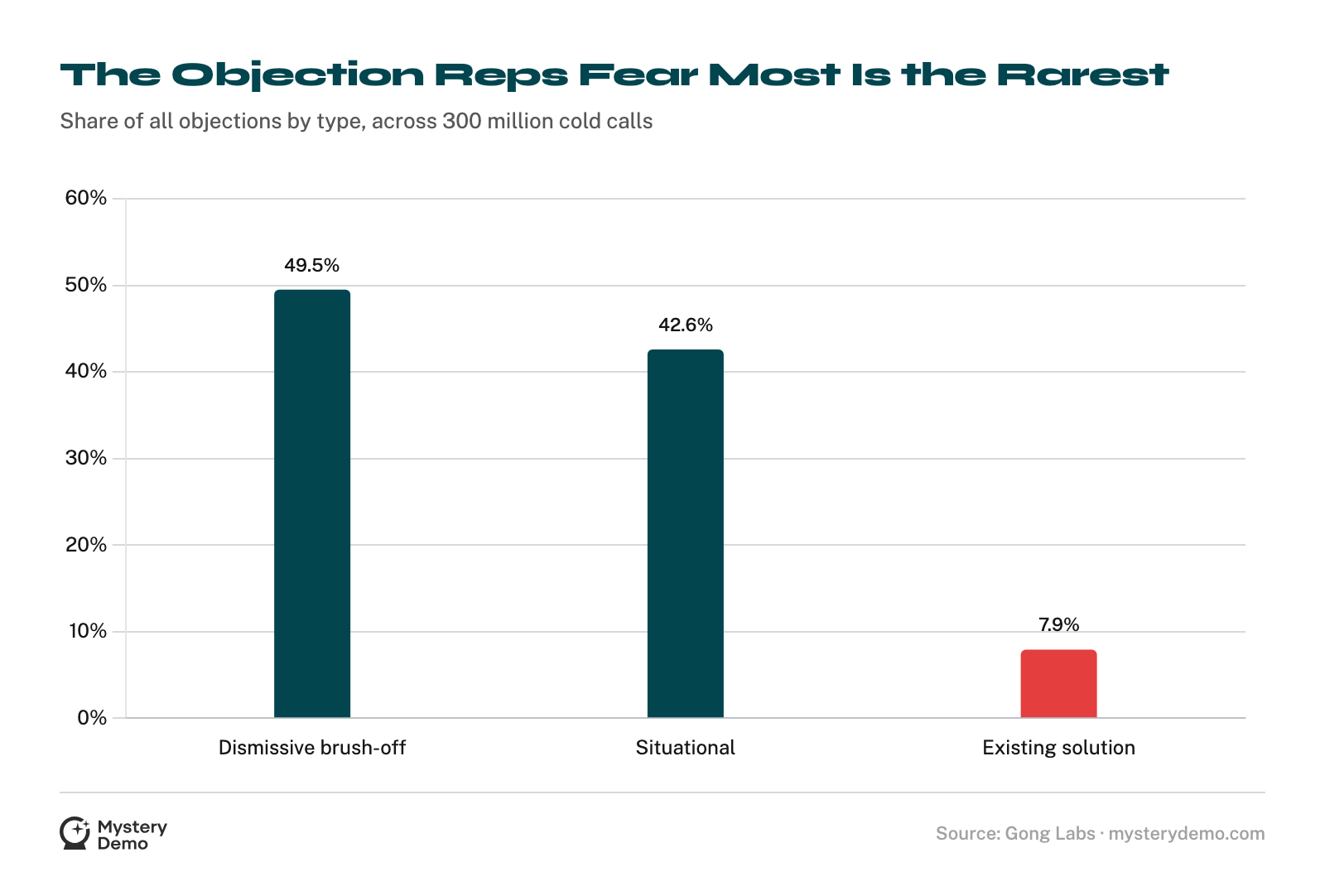
That last number inverts what reps fear. The objection that keeps salespeople up at night, the one where the buyer says they already use a competitor, is the one they hear the least.
Nearly half of all objections are a stranger’s reflex to being interrupted, and they vanish the moment the call becomes a conversation.
The 42.6% situational bucket is where the real evaluation lives, and price is only one item inside it, sitting next to timing, bandwidth, and fit.
The Objections That Are Getting Louder
If most objections are noise, two signals are getting genuinely stronger, and both are about money.
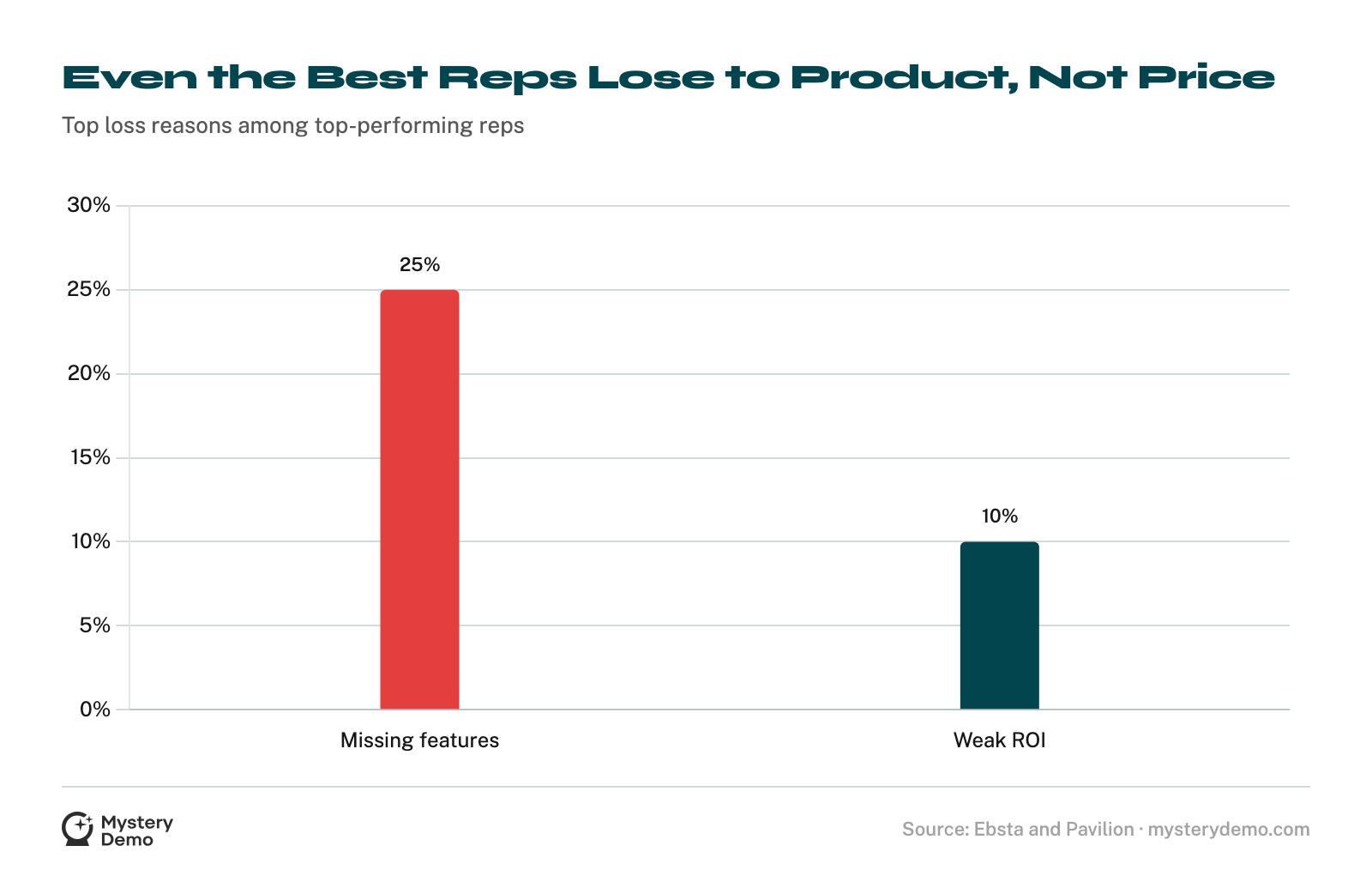
Put those two together and a useful split appears. Price is getting more scrutiny across the board, with buyers spending measurably more of the call interrogating cost. But the price objection is mostly a test, and good reps pass it.
The deals that do die in the hands of strong reps die on product, on a feature that is not there or an ROI case that does not hold.
Price is the loudest objection, but also the most survivable one.

The Best Reps Answer an Objection With a Question
The gap between a great rep and an average one shows up in the first three seconds after the objection lands, and the data can measure it.
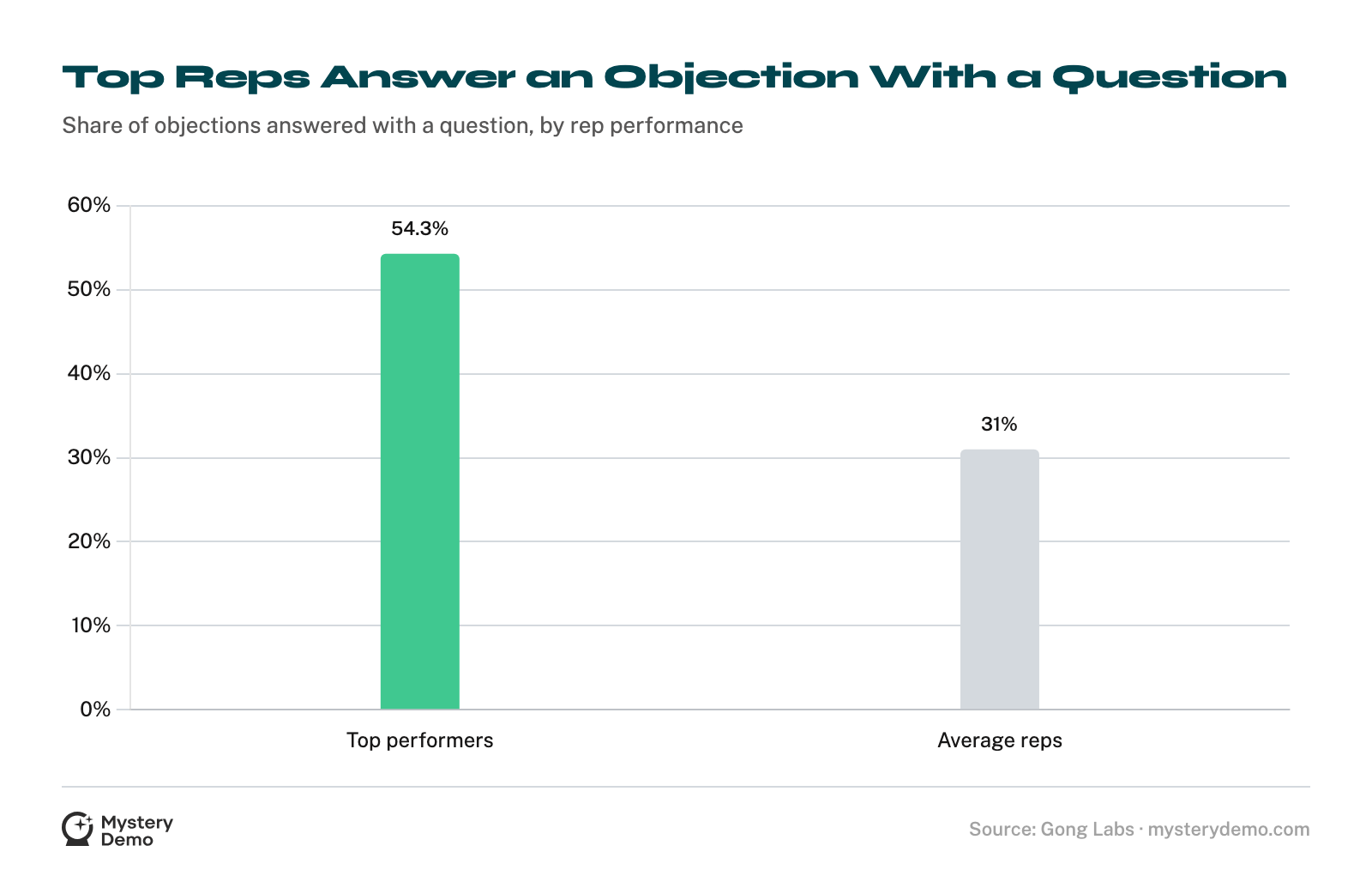
A question turns an objection into discovery, and a pause buys the room to ask it. A weaker rep hears the objection as a threat and accelerates into a rebuttal, talking faster at the exact point they should slow down.
That word-count shift shows up in the data. This is the part of a demo we watch most closely from the buyer’s seat, because how a rep handles the first real push tells you how the rest of the deal will go.
The speed-up is what happens when a rep has run out of prepared answers, and buyers can feel it.
Reading that moment on a rival is part of what a competitor sales-tactics review turns up.
.png)

Bring Price Up on the First Call
The most counterintuitive finding in all of this is about timing. Most reps delay price and budget for as long as they can. The data says the opposite works better: the longer you wait, the more the deal slips away.
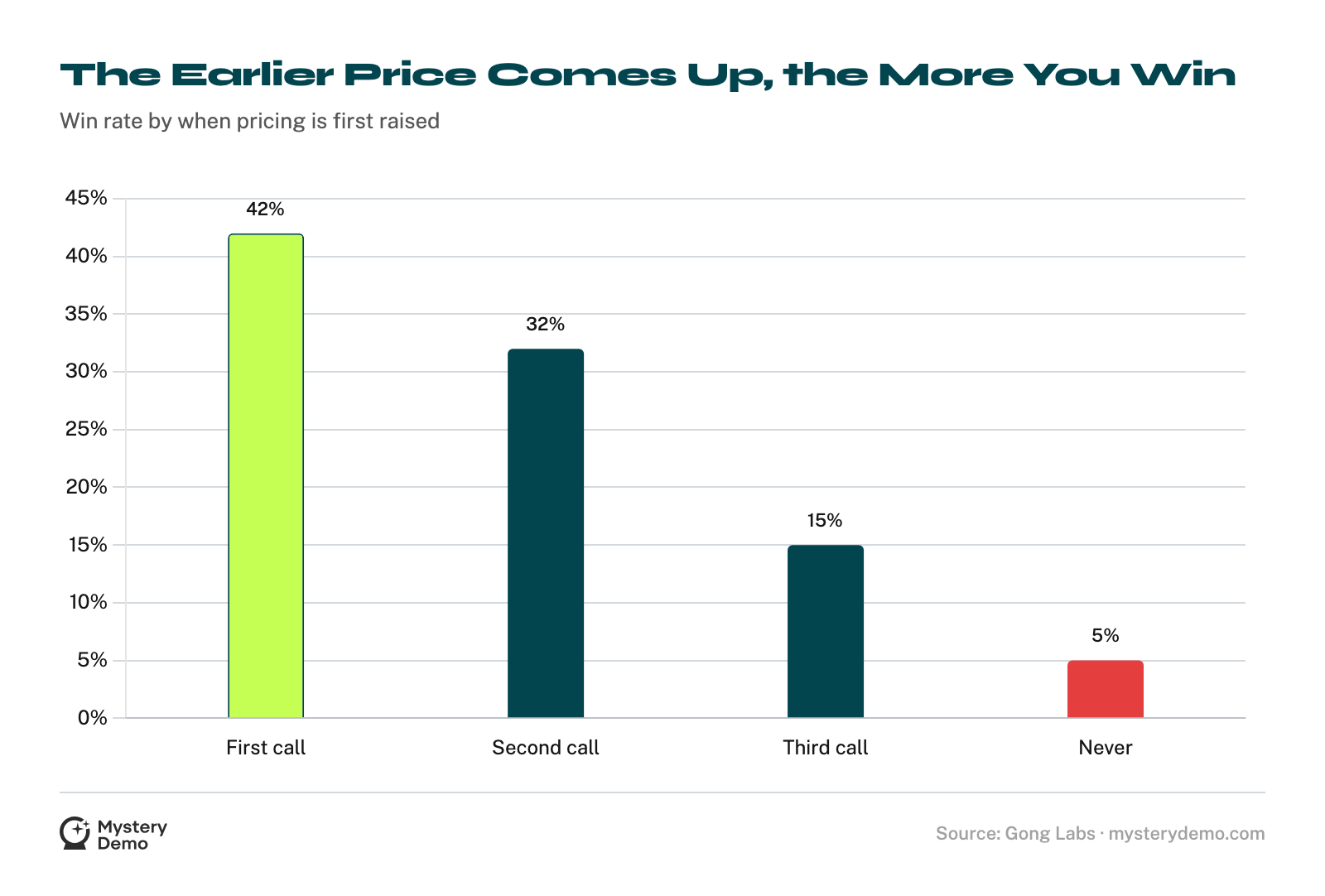
Those are two cuts of the same study, one for when pricing first comes up and one for when budget does, and they point the same way. The fear is that talking money early scares buyers off, and the data shows the reverse.
Raising budget on the first call lengthens the relationship from two interactions to four. Naming the money early is a qualifying move: it surfaces the real situational objection while there is still time to handle it, instead of letting it sit unspoken until it kills the deal later.
The worst outcome of all is the 5% win rate that comes from never discussing price at all.
Trade, Don’t Cave
When the price objection turns into a real negotiation, the difference between top performers and everyone else is preparation, and it shows up as a refusal to simply drop the number.
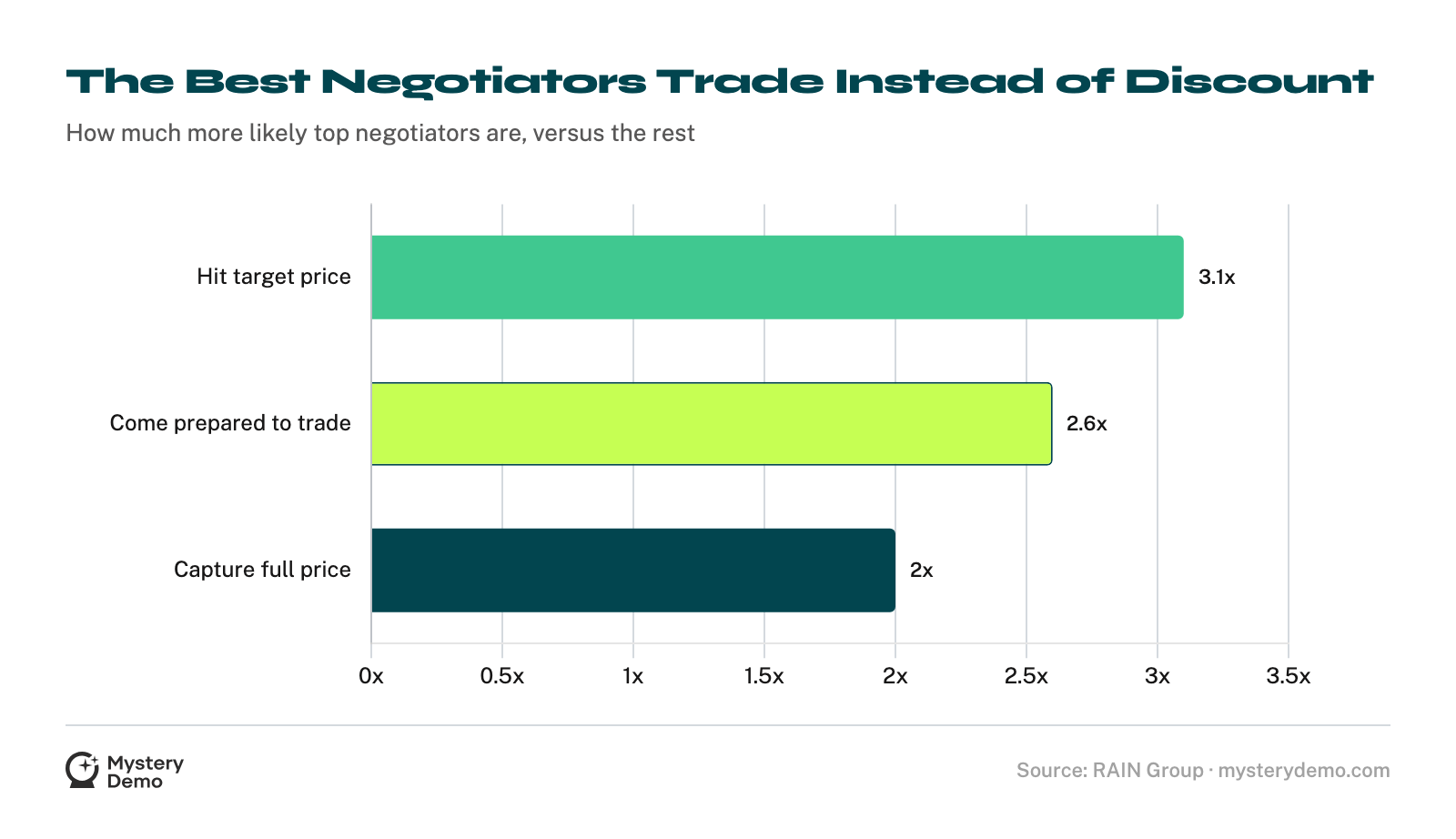
The thread through all four is control. A rep who caves the moment a buyer says too expensive signals the list price was negotiable all along, and trains the buyer to push harder next time.
A rep who trades, swapping a concession for a longer term or a smaller scope, keeps the price anchored and the value in view.
From where we sit, this is the clearest tell of a mature sales operation: the reps who hold their price under pressure usually work for companies that know what their product is worth.
All of this is observable from the outside. The objection moment is the most revealing scene in a competitor’s demo: what they pre-empt, what they fear, how fast they discount, and whether they ask a question or reach for a rebuttal.
What no benchmark gives you is the objection playbook on your competitor: their scripts, their tells, where they hold firm, where they fold, and the exact moment their price stops being real.
Give us the objection your reps lose on most. We’ll raise it inside your competitor’s demo and bring back their script, the point where they hold, and the moment their price stops being real.
Frequently Asked Questions
What are the most common sales objections in B2B SaaS?
They concentrate into a few buckets. Across 300 million cold calls, dismissive brush-offs (49.5%) and situational objections like price, budget, and fit (42.6%) dominate, while competitor objections are rarest at 7.9%1.
How many objections do I really need to prepare for?
Five. The top five objections account for 74% of all objections raised, so mastering those answers covers you three times out of four1.
Is price the most common sales objection?
Not exactly. Price sits inside the situational bucket (42.6% of objections), but the single biggest category is dismissive brush-offs at 49.5%, which are reflexes rather than real concerns1.
How often do buyers object that they already use a competitor?
Less than reps expect. Existing-solution objections, including a competitor or a locked contract, are just 7.9% of all objections, the rarest category1.
Are price objections getting more common?
Yes. The average length of pricing conversations grew 62% from 2020, and pricing mentions rose 18% since 20224.
What do top reps lose deals to, if not price?
Product. Among top performers, the leading loss reasons are missing features (25%) and weak ROI (10%), not price or competitors5.
How do the best reps handle objections differently?
They ask instead of argue. Top performers respond to an objection with a question 54.3% of the time, versus 31% for average reps2.
Should you pause after a sales objection?
Yes. The best reps pause about five times longer after an objection, while weaker reps speed up from 173 to 188 words a minute when flustered2.
When should you bring up price in a sales call?
Early. Win rates are 42% when pricing is first raised on the first call, dropping to 32% on the second, 15% on the third, and 5% when it never comes up3.
Does talking about budget early scare buyers off?
No, it does the opposite. Discussing budget on the first call lifts win rates from 7% to 49% and doubles buyer-seller interactions from two calls to four3.
What is the worst way to handle a price objection?
Never raising price at all, or caving instantly. Deals where pricing is never discussed win just 5% of the time3, and reps who discount on demand signal the list price was never real.
Is it better to discount or to trade on a price objection?
Trade. The best negotiators are 2.6x more likely to come prepared to trade, adjusting scope rather than dropping the price6.
How much better are top sales negotiators on price?
Substantially. They are 3.1x more likely to hit their target price and 12.5x more likely to be satisfied with the outcome6.
Does leading with value protect price?
Yes. Organizations that answer price pressure with value are 2x more likely to capture their full price6.
Should the rep or the buyer lead the price conversation?
The rep. Top negotiators are almost twice as likely to lead the negotiation rather than react to the buyer6.
Why do reps overestimate the competitor objection?
Because it is memorable, not because it is common. Competitor objections are only 7.9% of all objections1, but they feel high-stakes, so reps over-prepare for the rarest pushback and under-prepare for the situational one.
Are most sales objections real?
Often not. Nearly half are dismissive reflexes (49.5%) rather than considered concerns, and they tend to dissolve once the call becomes a genuine conversation1.
What does a competitor’s objection handling reveal about them?
A great deal. Whether a rival’s reps ask a question or reach for a rebuttal, how fast they discount, and what they pre-empt all signal how mature and confident their sales operation is, which is what we capture for you, objection by objection.
References
- Gong Labs: We Found the Top Objections Across 300M Cold Calls (2024)
- Gong Labs: The 7 Best Objection Handling Techniques for Sales Reps (2019)
- Gong Labs: When to Discuss Price and Budget According to Data (2020)
- Gong Labs: The Best Sales Insights of 2024 (2024)
- Ebsta and Pavilion: 2024 B2B Sales Benchmarks (2024)
- RAIN Group: Strategies and Tactics for Sales Negotiation (2025)
.png)


